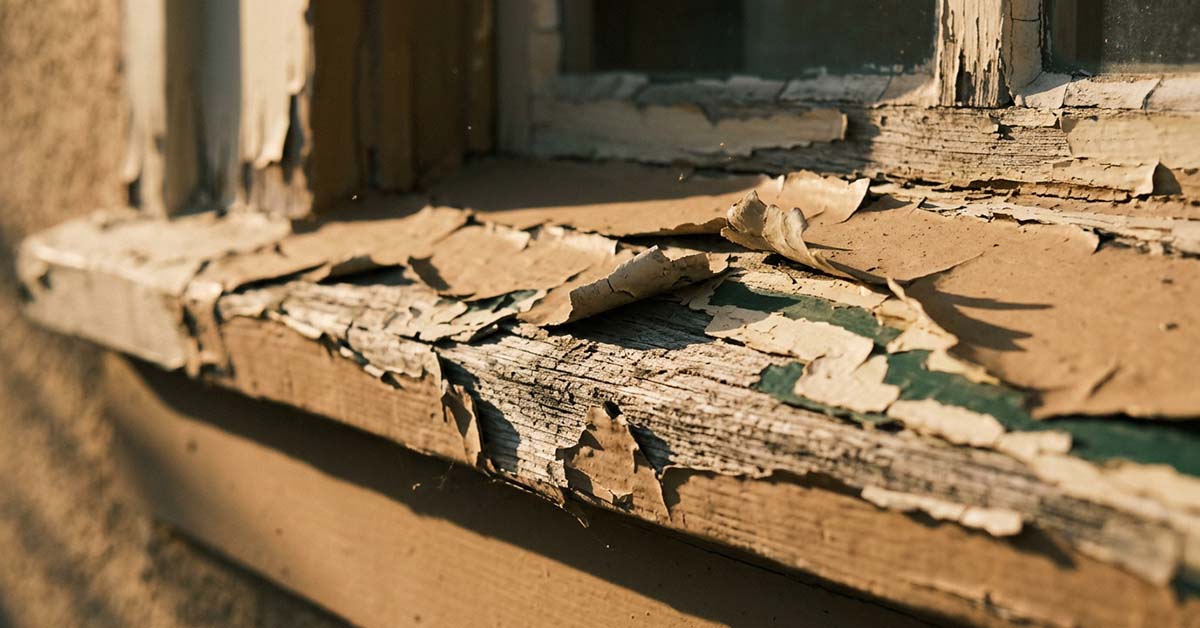
Lead-based paint is one of the most consequential—and most regulated—legacy hazards in older American housing, and California is no exception. As an InterNACHI-certified home inspector working in Ventura County, I see deteriorating paint on pre-1978 homes more often than any other lead-related concern, and one of the most useful things I can do during a buyer’s inspection is help homeowners understand what the federal and state framework actually requires, what a visual inspection can tell them, and where the line falls between something a general inspector flags and something a certified testing professional has to confirm.
This article is a guide to recognizing the conditions that warrant attention. It is not a substitute for the federal lead-based-paint disclosure required at sale, and it is not a substitute for the certified inspection or risk assessment that may be needed before a renovation begins.
Why Lead Paint Is Regulated the Way It Is
Lead is a neurotoxin. Even small exposures over time can cause permanent neurological harm, particularly in children under six and in pregnant women. Lead-based paint was used widely in American homes from the late 1800s through the mid-twentieth century, and the Consumer Product Safety Commission’s federal ban on lead-containing residential paint—codified at 16 CFR Part 1303—took effect for products manufactured after February 27, 1978.
The regulatory framework that matters in real estate transactions today rests on a few key pieces:
- The Residential Lead-Based Paint Hazard Reduction Act of 1992, commonly called Title X, with disclosure requirements implemented by EPA and HUD under Section 1018. The rule requires sellers and landlords of most pre-1978 homes to (1) disclose any known lead-based paint or lead-based-paint hazards, (2) provide all available records and reports, (3) give buyers and tenants the EPA pamphlet Protect Your Family from Lead in Your Home and a federal Lead Warning Statement attached to the contract or lease, and (4) give buyers a 10-day opportunity to conduct their own lead-based paint inspection or risk assessment before becoming obligated under the contract. The 10-day window can be lengthened, shortened, or waived by written mutual agreement.
- The EPA Renovation, Repair, and Painting (RRP) Rule, effective April 22, 2010, requires that renovation work disturbing more than 6 square feet of interior or 20 square feet of exterior painted surface in a pre-1978 target housing unit or child-occupied facility be performed by an EPA-certified firm using EPA-certified renovators trained in lead-safe work practices. Window replacement and demolition of painted surfaces in pre-1978 housing are categorically subject to the rule regardless of square footage.
- California Department of Public Health regulations layer additional state requirements on top of the federal framework, particularly for state-certified lead inspectors, lead risk assessors, and lead abatement contractors performing work in California.
What this means practically: any home built before 1978 is presumed to contain lead-based paint somewhere unless certified testing has shown otherwise. That presumption drives what a seller must disclose, what a renovation contractor must do, and what your inspection should be looking for.
Where Lead Paint Tends to Show Up
Not every painted surface in a pre-1978 home contains lead, and not every lead-painted surface is hazardous. The locations that matter most—because they generate the most exposure when damaged—are friction surfaces and surfaces where children make contact:
- Window jambs, sashes, and sills. Friction between operating sashes and their tracks generates the highest concentration of lead dust in a typical home. Older single-hung and double-hung windows in pre-1978 California homes are the single biggest source of lead-dust exposure I see.
- Door jambs and door edges. Friction during use abrades paint into dust over decades.
- Baseboards, chair rails, and trim. Lower trim is more often within reach of children.
- Stair treads, risers, and railings. High-traffic and chewable surfaces.
- Exterior siding, trim, soffits, and porches. Weathering causes chalking and peeling that contaminates surrounding soil—a common source of yard contamination near older homes.
- Older fence and gate paint. Often overlooked.
- Painted radiator covers and HVAC grilles. Heat accelerates breakdown of older paint.
Newer paint applied over older paint can encapsulate the lead temporarily, but the encapsulation only works as long as the topcoat remains intact. Cracking, peeling, chalking, blistering, or flaking paint on any surface in a pre-1978 home is the visual cue that turns a presumed-lead-paint condition into a presumed-lead-paint hazard.
What an InterNACHI Inspection Can and Cannot Tell You
A general home inspection is a visual, non-invasive evaluation. As an InterNACHI inspector, I can:
- Note the home’s construction date and flag it as pre-1978 in the report, putting the federal disclosure obligation on the buyer’s radar
- Document deteriorated painted surfaces—peeling, cracking, chalking, blistering, or flaking paint—and identify them as potential lead hazards in pre-1978 housing
- Photograph specific areas of concern—window troughs, door jambs, exterior trim, porch surfaces—with notes for follow-up
- Recommend a certified lead inspection or risk assessment when conditions warrant it
- Recommend that any renovation, repair, or repainting be performed by an EPA-certified RRP renovator following lead-safe work practices
What a home inspection cannot do:
- Confirm the presence of lead. That requires either an XRF (X-ray fluorescence) analysis performed by a certified lead inspector or a paint-chip sample sent to an accredited laboratory. There is no visual test that can reliably distinguish lead-based paint from non-lead paint.
- Quantify the lead dust load on floors, sills, or troughs, which requires wipe-sampling and laboratory analysis as part of a certified risk assessment.
- Authorize abatement. Any disturbance, removal, or remediation of lead-based paint in California is subject to federal and state rules and must be performed by certified personnel under specific conditions.
If a buyer asks me, “Is there lead paint in this house?” the honest answer for any pre-1978 home is, “Treat it as if there is, until certified testing tells you otherwise. Here is where you should be most careful, and here is who to call before any renovation work begins.”
Federal Disclosure: What Sellers and Buyers Should Expect at the Transaction
For most sales of homes built before 1978, federal law requires the seller to deliver:
- A signed lead-based-paint disclosure form stating either that the seller has knowledge of lead-based paint or hazards (and what those are) or that the seller has no knowledge
- Any records or reports the seller has on lead-based paint or hazards in the home
- The EPA-approved pamphlet Protect Your Family from Lead in Your Home
- A 10-day inspection opportunity during which the buyer may, at their own expense, conduct a certified lead-based-paint inspection or risk assessment. The buyer can waive this opportunity in writing.
These are not optional. The federal disclosure requirement applies regardless of state requirements, and California’s own disclosure framework—centered on the Transfer Disclosure Statement and the Natural Hazard Disclosure—runs in parallel. Real estate agents are required to ensure compliance, and failures can carry significant penalties.
A common point of confusion: the federal disclosure does not require the seller to test for lead-based paint or to remediate any known issues. It requires the seller to disclose what they know. A “no knowledge” disclosure is legally permissible, and many California sellers of pre-1978 homes sign it truthfully because they have never had testing done.
Renovation, Repair, and Painting: The Rule That Bites Most Homeowners
The federal RRP rule is the regulation that most often catches new owners of pre-1978 California homes by surprise. Once you close on a pre-1978 home and start planning even modest work—a kitchen remodel, replacing windows, repainting the exterior, refinishing a porch—the rule applies the moment the disturbed area exceeds the threshold.
Practically, this means:
- Hire only EPA-certified RRP renovators for any work in a pre-1978 home that involves disturbing painted surfaces above the threshold. The certification is a small but specific credential and contractors should be willing to show it.
- Lead-safe work practices include containment of the work area, dust-minimizing tools and techniques, and specific cleaning and clearance procedures at the end of the job.
- Penalties for non-compliant work can be substantial, and lawsuits from neighbors or tenants exposed to lead dust during a non-compliant renovation are not unheard of.
For a broader picture of issues to plan for in older California housing stock, see our overview of common issues in older California homes.
For Buyers
If you are considering an offer on a pre-1978 California home, build the federal lead-paint framework into your due diligence:
- Receive and review the lead-based-paint disclosure before you sign or as required by your contract
- Take the 10-day inspection opportunity seriously if you have small children, are pregnant, or plan immediate renovation. A certified lead inspection or risk assessment costs a few hundred dollars and produces a definitive picture of where lead is and what condition it is in.
- Read the EPA pamphlet. It is short, clearly written, and tells you what to watch for over the years you own the home.
- Plan for the RRP rule in any renovation budget. Lead-safe work practices add to the cost of any renovation in a pre-1978 home, but skipping them is not legally an option.
For Sellers
If you are listing a pre-1978 California home:
- Complete the federal lead-based-paint disclosure honestly. “No knowledge” is acceptable when you genuinely have none; declaring it falsely is not.
- Gather any prior testing or remediation records and provide them with the disclosure.
- Address visibly deteriorated paint on a pre-listing basis when feasible—not necessarily through certified abatement, but at minimum through stabilization, scraping under containment, and repainting by a qualified professional. Visibly peeling exterior paint on a pre-1978 home will be flagged in any thorough inspection.
- Be prepared for the 10-day inspection opportunity. Many California buyers waive it; some do not.
The Value of a Ventura County InterNACHI Inspection
Lead paint is one of the categories where the difference between a thorough inspection and a rushed one shows up most clearly. A careful InterNACHI inspection of a pre-1978 home documents every area of deteriorated paint, identifies the high-risk locations even when paint is currently intact, and sets the buyer up to take the federal disclosure and the 10-day inspection opportunity seriously. Our team works in Ventura County housing stock that includes a meaningful share of pre-1978 homes—1920s bungalows in central Ventura, mid-century homes in Camarillo and Oxnard, ranch-style homes throughout—and we know what to look for in each era. (For more on why an unhurried, certified inspection matters in California, where the state does not license home inspectors, see our piece on why California home inspections require more than just experience.)
Inspection Disclaimer
InterNACHI inspections are visual, non-invasive evaluations conducted in accordance with the Standards of Practice. Inspectors document conditions consistent with potential lead-based paint hazards in pre-1978 housing—including deteriorated, peeling, chalking, or flaking painted surfaces—but do not collect samples, perform XRF analysis, or quantify lead dust loads. Confirmation of lead content, certified inspections and risk assessments, and any disturbance or abatement of lead-based paint must be performed by personnel certified under EPA, CDPH, and Cal/OSHA programs as applicable.
Buying or selling a pre-1978 home in Ventura County or Southern California? Schedule your InterNACHI home inspection today—and make sure the lead-paint conditions in the home are clearly documented and understood before you close.