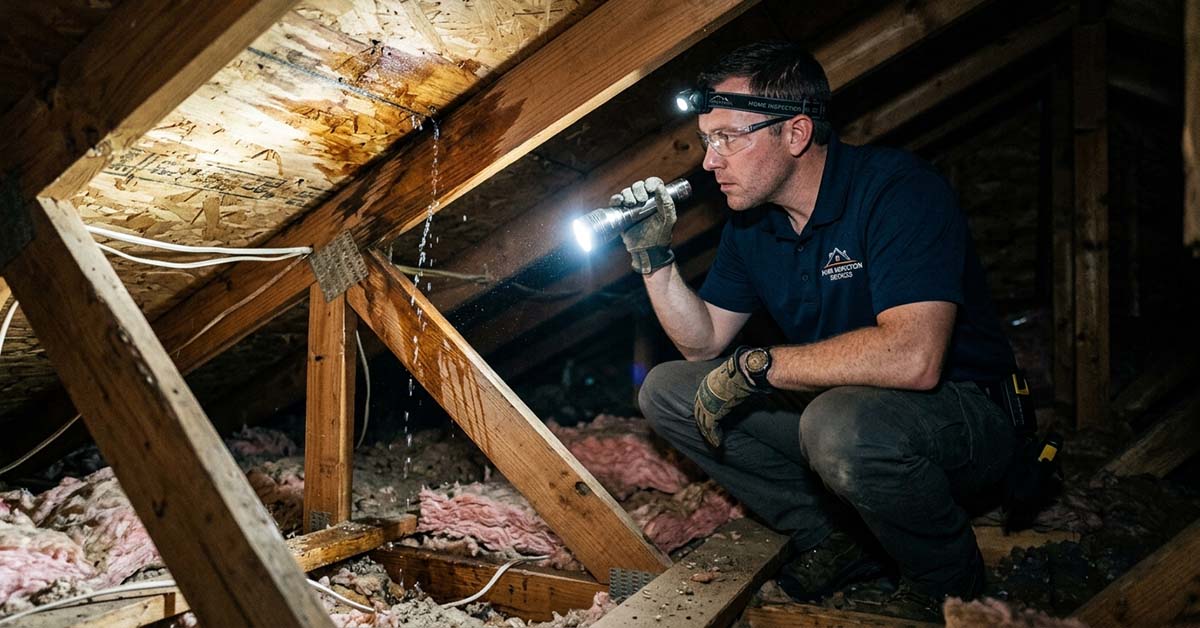
Homes in Ventura County and across Southern California face a distinct set of challenges when it comes to water intrusion. As an InterNACHI-certified home inspector with deep experience in this region, I’ve seen firsthand where water tends to find its way into homes—and how our local environment can accelerate the process. Understanding these vulnerabilities is key to protecting your investment and keeping your home safe and dry.
Common Entry Points for Water Intrusion
Roof and Roof Penetrations
- Damaged or aging shingles and tiles are among the most common causes of water infiltration.
- Roof penetrations—vents, chimneys, skylights, and exhaust fans—are frequent leak points, especially when flashing or sealants crack or fail over time.
- Heavy rain events have a way of revealing weaknesses that may otherwise go unnoticed for months or even years.
Roof Flashing and Siding Flashing
- Flashing serves a critical role in preventing water from filtering behind siding or migrating into wall cavities.
- In our coastal climate, the combination of salt air, moisture, and temperature swings can cause flashing to deteriorate more quickly than in other regions.
- When flashing is missing, damaged, or improperly installed, it often leads to hidden leaks that can go undetected until significant damage has already occurred.
Decks and Projected Trim
- Flashing around decks and overhangs is a common failure point—it’s often inadequate or missing entirely.
- When water penetrates through gaps in these areas, it can lead to wood rot and structural framing damage.
- Periodic inspection of seal integrity and flashing condition around decks and trim is an important part of home maintenance.
Gutters and Drainage
- Clogged or undersized gutters can cause water to back up and overflow into fascia boards and exterior walls.
- Poor drainage around the foundation can saturate nearby soil, leading to moisture intrusion into basements or crawlspaces.
- When local rainstorms are combined with landscape grading issues, the result is one of the most common sources of water entry in Southern California homes.
How Our Regional Environment Increases Risk
- Ventura County’s Mediterranean climate brings wet winters that put sustained stress on roofing and drainage systems.
- Marine layers and morning fog expose exterior surfaces to prolonged moisture, which can promote microbial growth and gradual material deterioration over time.
- Seasonal storms and wind-driven rain are especially effective at exposing vulnerabilities in roofing and flashing that might otherwise remain hidden.
Why Water Intrusion Matters When Buying or Selling a Home
Water intrusion is one of the most consequential issues that can surface during a real estate transaction. In California, sellers of most residential properties are required to complete a Transfer Disclosure Statement, which specifically asks whether the seller is aware of any past or present water intrusion, leaks, standing water, drainage problems, or moisture-related soil settling. Sellers must also disclose any known history of mold or mildew.
For buyers, a professional home inspection is one of the most valuable steps you can take during your contingency period. An inspection can uncover signs of water intrusion that may not be visible during a casual walkthrough—staining in attic spaces, moisture around window frames, or evidence of past leaks that were cosmetically repaired but never properly addressed. These findings give you the information you need to negotiate repairs, request a price adjustment, or simply make a fully informed decision before closing.
For sellers, a pre-listing inspection can be a smart strategy. Identifying and addressing water intrusion issues before your home goes on the market helps you avoid surprises during the buyer’s inspection, reduces the risk of delayed closings or renegotiated offers, and demonstrates transparency that builds buyer confidence.
Whether you’re buying or selling, understanding the condition of a home’s water management systems is essential—especially in a coastal climate like ours, where moisture-related problems are more common than in many other parts of the country.
Practical Tips for Preventing Water Intrusion
While professional inspections are essential, there are steps every homeowner can take between inspections to reduce the risk of water damage:
- Inspect your roof regularly, especially after storms. Look for cracked, loose, or missing tiles and shingles, and check the condition of flashing around penetrations.
- Keep gutters and downspouts clear of leaves and debris. Make sure downspouts direct water well away from the foundation.
- Check exterior caulking and sealants around windows, doors, and where different building materials meet. These can dry out and crack over time, particularly in our climate.
- Monitor grading and drainage around your home’s perimeter. Soil should slope away from the foundation, not toward it.
- Look for early warning signs indoors, such as water stains on ceilings or walls, musty odors, peeling paint, or warped flooring. These often indicate a hidden moisture problem that needs attention.
Catching small issues early is almost always less expensive than dealing with the structural damage, mold remediation, or extensive repairs that can result from prolonged water intrusion.
The Value of a Ventura County InterNACHI Inspection
With specific knowledge of our local environment and regional building practices, an InterNACHI home inspector will assess common water intrusion areas with a trained and experienced eye. Our detailed reports help homeowners and buyers identify problems early—before they turn into expensive repairs.
Inspection Disclaimer
InterNACHI inspections are visual, non-invasive evaluations conducted in accordance with the Standards of Practice. Inspectors document observed signs of water intrusion but do not perform invasive moisture testing or destructive analysis. Professional contractors may be needed for repairs and advanced diagnostics.
Protect your Ventura County or Southern California home from water damage. Contact an InterNACHI-certified home inspector today for a thorough inspection tailored to our unique climate and construction challenges.