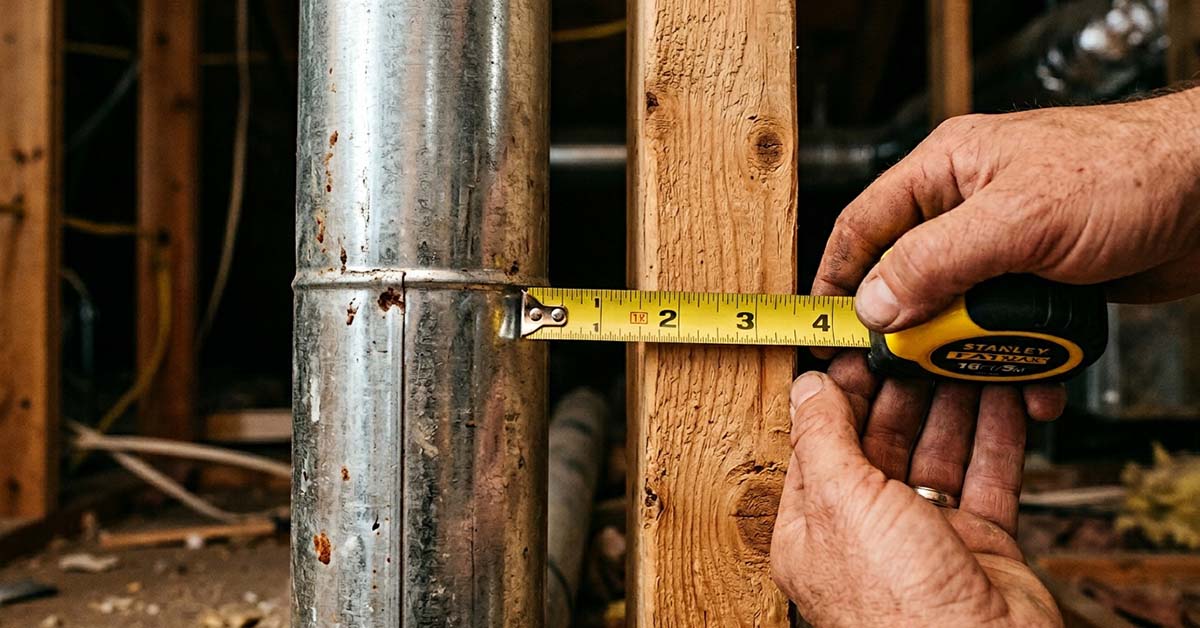
When inspecting furnaces, water heaters, and other combustion appliances, vent pipe safety is a top priority. As an InterNACHI-certified home inspector in California, understanding and reporting the correct clearance requirements for vent pipes can prevent serious fire hazards and provide homebuyers with confidence and peace of mind.
The Safety Facts: Pipe Type and Clearance
Single-Wall Vent Pipes
- Required clearance from combustibles: 6 inches
- Usually found in older homes and basic installations
- Made of single-layer galvanized metal that gets very hot
- Should not touch wood, insulation, drywall, or other household materials
- Permitted for a short, direct, visible run from the appliance — such as above a water heater or furnace in a garage or equipment closet — but cannot pass through or into attics, crawl spaces, walls, or floors
Double-Wall (Type B) Vent Pipes
- Required clearance from combustibles: 1 inch
- Two layers of metal with an air gap between them, keeping the outer surface cooler
- Found in attics, tight spaces, and most new installations
- Safer when used near framing or other building materials
- Required whenever venting must pass through an attic, wall cavity, or floor
Why Clearances Are So Important
These safety gaps are designed to prevent surrounding materials from reaching ignition temperatures on hot appliance exhausts. The danger is not just from direct contact — a process called pyrolysis means that wood and other combustibles exposed to repeated heating over time will gradually lower their ignition point, eventually catching fire at temperatures far below the standard ignition threshold of around 572°F. This is why even clearances that are “almost” correct can become a serious hazard over years of use.
Failing to meet these clearances increases the risk of fire, especially in attics and utility closets already densely packed with combustibles. The difference between 6 inches and 1 inch is critical — a single misstep can mean disaster for unprotected wood framing or storage. It is also worth noting that neither single-wall nor Type B pipe should have insulation in direct contact with it: heat transfer through the pipe wall can still occur and create a dangerous hot spot.
How Practice Has Changed
California’s building standards — and national standards — have evolved to favor double-wall (Type B) venting for most applications, reducing required clearances and boosting overall safety. California’s code places specific restrictions on where single-wall pipe can be used: it is permitted for a short, direct, exposed run from the appliance to where it transitions to Type B or exits the building, but it cannot be routed through or into attics, crawl spaces, walls, or floors, where corrosion or separation would go unseen and unaddressed. Many older homes still have single-wall pipes that do not meet today’s standards, which highlights the need for experienced, knowledgeable inspectors.
What This Means When Buying or Selling a Home
Vent pipe deficiencies are more than a technical footnote — they are safety hazards that can directly affect a real estate transaction.
For buyers, a vent clearance violation found during a home inspection is a legitimate and important item to raise with the seller. Safety issues of this nature are among the findings that mortgage lenders may require to be resolved before approving the release of funds. Buyers can request that the seller repair the issue prior to closing, negotiate a credit toward closing costs, or ask for a reduction in the purchase price to cover the cost of correction. Documenting the issue with a professional inspection report strengthens your position in those negotiations considerably.
For sellers, having vent pipe issues identified and corrected before listing can prevent surprises that delay or derail a sale. A pre-listing inspection is a smart investment: it allows you to address safety items on your own timeline, with contractors of your choosing, rather than under the pressure of a purchase contract deadline. Sellers who are transparent about known deficiencies and can show they have been corrected often find the negotiation process smoother.
In either case, a safety deficiency in the vent system is not a cosmetic issue. It is the kind of finding that buyers are right to treat seriously and sellers are wise to get ahead of.
Why Experience and Education Matter in Inspections
A trained, certified home inspector can:
- Spot incorrect vent installations or missing clearance
- Advise on code upgrades during remodels or replacements
- Discern between single-wall and Type B vent pipes — even when installations involve improper combinations
- Identify hazards that are not immediately visible or that might be missed in a cursory check
- Recognize improper installations such as single-wall pipe routed through an attic, wall cavity, or crawl space, where it is not permitted under California code
InterNACHI Inspection Disclaimer
As an InterNACHI member, all inspections are visual and non-invasive, conducted in strict accordance with the Standards of Practice. Inspectors report on visible vent pipe type, clearance, and any deficiencies — but do not dismantle vent systems or perform engineering analysis. Final compliance and safe installation should always be confirmed by a licensed HVAC or plumbing professional.
Important Manufacturer and Code Note
These clearance recommendations are based on InterNACHI standards and common manufacturer guidelines. Homeowners and professionals must always follow the specific manufacturer’s installation instructions and local codes, which may vary by appliance, vent pipe model, size, and jurisdiction. Always follow the manufacturer’s instructions. When in doubt, defer to the most restrictive requirement to ensure safety.