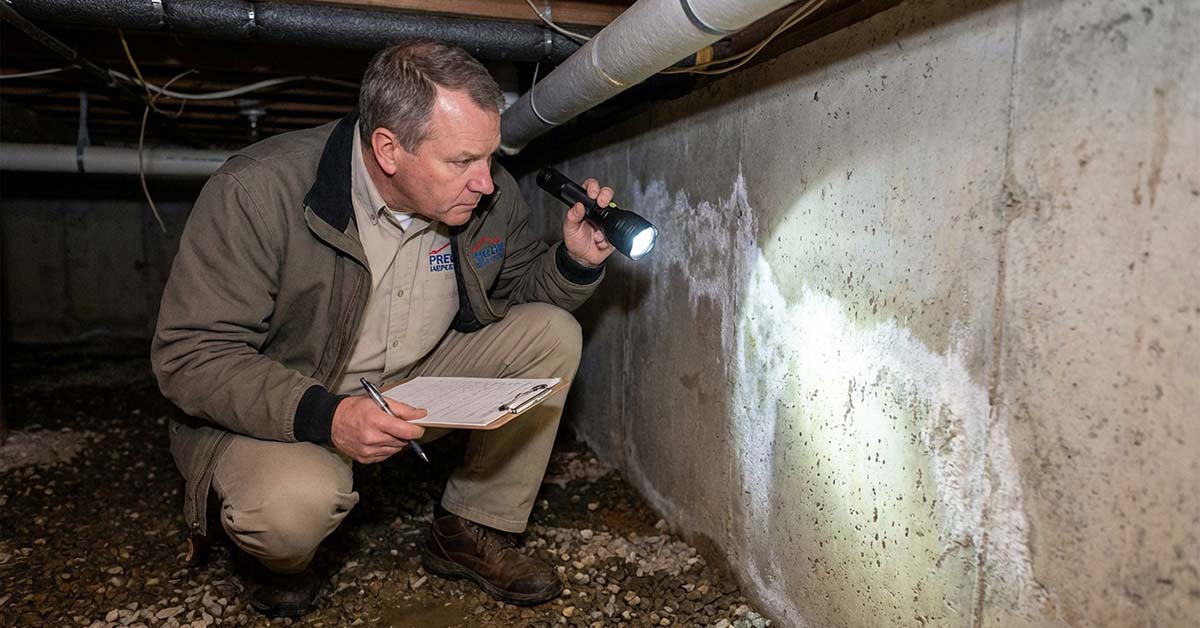
Efflorescence is a common phenomenon that appears in homes throughout California, especially in areas with high soil moisture or older masonry construction. As an InterNACHI-certified home inspector, recognizing and interpreting efflorescence can help homeowners address moisture concerns—both minor and major—before they develop into larger issues.
What Is Efflorescence?
Efflorescence is a white, powdery deposit that forms on the surface of porous building materials such as concrete, brick, stucco, or stone. It occurs when water-soluble salts within the material migrate to the surface along with moisture, then are left behind as the water evaporates—resulting in a visible crystalline bloom. The word itself comes from the French meaning “to flower out,” which describes the way deposits seem to emerge from within the material itself.
It is worth noting that new masonry can sometimes produce efflorescence in the first weeks or months after construction, as the material releases moisture while adjusting to its environment. In these cases, the deposits may disappear on their own without any intervention.
Why Does Efflorescence Form?
Three essential conditions must be present for efflorescence to develop:
- Soluble salts present within the building material
- Moisture migration through the material, often driven by capillary action from groundwater or rain
- Evaporation at the surface, which deposits salts as water exits the material
Capillary action—the same force that draws water up through a paper towel—is remarkably powerful in building materials like concrete. This means that moisture and the salts it carries can travel significant distances through a structure, which is one reason why the visible surface deposit and the actual moisture source are sometimes far apart.
Where to Find Efflorescence in California Homes
Efflorescence can show up in a number of locations around a typical California home. Common areas include:
- Foundation footings and stem walls
- Concrete patios and walkways
- Masonry chimneys and stucco walls
- Crawlspaces or basements with elevated moisture levels
Is Efflorescence a Serious Problem?
Efflorescence itself is usually no more than an aesthetic issue. That said, its presence signals that moisture is actively moving through the building material, which can point to a deeper problem with water intrusion, foundation drainage, or vapor barriers. When efflorescence appears alongside other symptoms—such as mold, mildew, musty odors, cracked masonry, or spalling—it should prompt further evaluation and possible repairs.
Spalling deserves particular attention. If moisture intrusion continues unchecked, the buildup of salts beneath the surface can eventually generate enough pressure to cause the surface layer of masonry or concrete to flake or break away entirely. Efflorescence can therefore serve as an early warning sign of deterioration that, if ignored, may escalate to structural damage.
Efflorescence vs. Mold: How to Tell the Difference
One of the most common points of confusion for homeowners is distinguishing efflorescence from mold or mildew. The two can look similar at a glance, but there are reliable ways to tell them apart:
- Color: Efflorescence is almost always white, yellow, or brown. If the substance is pink, purple, or black, it is not efflorescence.
- Texture: Efflorescence will crumble to a fine powder when pressed. Mold holds its structure and should not be handled directly.
- Solubility: Efflorescence will dissolve in water; mold will not.
- Surface type: Efflorescence forms on inorganic materials like concrete, brick, and stone. Mold grows on organic materials such as wood or paint—though mold can occasionally consume dirt deposits on masonry surfaces.
Making this distinction matters practically as well. Mold testing can be expensive, and being able to correctly identify efflorescence can save homeowners unnecessary costs while still ensuring the underlying moisture concern is addressed.
What Buyers and Sellers Should Know
For Buyers
Seeing efflorescence during a home purchase does not need to be cause for alarm, but it does warrant a closer look. The key questions to ask are whether the deposits appear isolated or are part of a wider moisture pattern, and whether they are accompanied by other warning signs such as musty smells, staining, or visible damage to framing or finishes. A professional inspection can help put what you are seeing into proper context and guide any follow-up steps.
Location also matters. Efflorescence on an exterior retaining wall is generally less concerning than deposits found on interior foundation walls or in a basement, where it may indicate more significant water infiltration.
For Sellers
If efflorescence is visible in your home, it is likely to be noted during a buyer’s inspection. Proactively addressing the underlying moisture source—whether that means improving drainage, regrading soil away from the foundation, or installing or repairing a vapor barrier—can help prevent recurrence and support a smoother transaction. Cleaning away the surface deposits without fixing the cause will only provide a temporary result, as efflorescence will return if moisture continues to move through the material.
How Should California Homeowners Respond?
If you notice efflorescence in or around your home, there are several practical steps worth taking:
- Monitor the extent and frequency of any deposits over time
- Address potential sources of moisture, including grading, drainage, leaks, and vapor barriers
- Consider a professional evaluation if efflorescence is accompanied by structural damage or interior moisture problems
- Distinguish efflorescence from mold or mildew—efflorescence is white and powdery and will dissolve in water, which mold will not
Removing Efflorescence
Efflorescence can typically be removed from masonry surfaces using one of several methods:
- Dry brushing: For light deposits, scrubbing with a stiff brush is often sufficient
- Pressure washing: Water under pressure can dissolve and dislodge deposits, though care should be taken not to introduce excess moisture into the material
- Diluted acid wash: White vinegar works well for small residential areas; commercial efflorescence cleaners are also available and avoid the hazards of stronger acids like muriatic acid
It is important to understand that cleaning the surface addresses only the visible symptom. Until the underlying moisture pathway is interrupted, efflorescence is likely to return.
Prevention
Reducing the conditions that allow efflorescence to form in the first place is the most effective long-term strategy. Common preventive measures include:
- Ensuring soil and hardscape slope away from the foundation to direct water runoff away from the structure
- Installing or maintaining capillary breaks, such as polyethylene sheeting between the soil and concrete, to interrupt moisture wicking
- Applying a hydrophobic impregnating sealant to masonry surfaces to resist water intrusion
- Using a dehumidifier in enclosed spaces such as crawlspaces and basements to reduce ambient moisture levels
InterNACHI Inspection Disclaimer
As an InterNACHI home inspector, efflorescence is recorded as a visual, non-invasive observation. An inspection will note the presence and potential implications of efflorescence, but does not predict future movement, test for chemical composition, or guarantee the absence of hidden moisture problems. Any further evaluation, moisture testing, or repairs should be carried out by licensed specialists.